The leisure practices of the French are evolving at a rapid pace. The Ministry of Culture published its 2025 Cultural Outings Barometer on September 18, 2026, which shows stabilized attendance after the post-pandemic rebound, with a slight decline compared to 2024. Meanwhile, regular sports practice has reached a historically high level according to INJEP, and on-demand viewing continues to grow.
Hybrid and experiential leisure: what the market now offers
Indoor leisure offerings have significantly changed in nature in recent years. Spaces that combine escape games, virtual reality, climbing, or immersive courses are multiplying in major French urban areas. The model is based on a promise: to offer light physical activity wrapped in a storyline or a digital dimension.
This type of hybrid leisure meets measurable demand. Field feedback indicates that customers are looking for short formats (one to two hours), bookable online, suitable for both a group of friends and corporate team building. Creative workshops (pottery, cooking, object making) follow the same logic: a guided experience, time-limited, with a tangible result to take home.
The available data does not yet allow for precise measurement of the market share of these formats compared to traditional leisure. However, the multiplication of brands and dedicated booking platforms suggests sustained growth. Several players regularly compile these trends, and leisure articles on HyperScoop allow tracking the evolution of these offerings over the months.

Video on demand and digital leisure: significant figures
The time spent in front of on-demand video content is steadily increasing. According to Médiamétrie, on-demand video content accounted for 39% of the daily video time of the French in 2025, compared to 36% a year earlier. The growth is no longer limited to young adults: it is particularly pronounced among those aged 35-49 and over 50.
This shift has direct consequences on the structure of leisure time. Evenings at home, once dominated by linear television, are reorganizing around streaming platforms and video games. New generations massively favor online entertainment in all its forms.
The question facing physical leisure stakeholders is one of complementarity rather than direct competition. A virtual reality escape game or an online sports class does not replace a hike, but it captures part of the available time budget. Field feedback varies on this point: some operators of parks and activity centers notice a more occasional clientele but willing to spend more per outing.
Sports practice in France: walking, running, and cycling lead
The National Barometer of Sports Practices 2025 from INJEP confirms an underlying trend. Regular sports practice has reached a historically high level in France. The three most represented activities remain walking, running, and cycling.
The main motivations revolve around health and well-being, far ahead of competition. This orientation partly explains the success of outdoor activities accessible without clubs or expensive equipment. Outdoor sports also benefit from a territorial effect: local authorities invest in marked trails, bike paths, and natural swimming areas.
- Walking and hiking remain the most cross-sectional practices, across all ages and social categories, with an almost zero entry cost.
- Cycling is growing thanks to urban and suburban infrastructure, supported by local policies for soft mobility.
- Running maintains a solid base, fueled by a dense calendar of local events (charity runs, trails, regional marathons).
Outdoor activities related to well-being (outdoor yoga, Nordic walking, paddleboarding) are also gaining ground, although their statistical weight remains modest compared to the three dominant disciplines.
Cultural outings and festivals: attendance stabilizing
The 2025 Cultural Outings Barometer from the Ministry of Culture presents a nuanced picture. Attendance at cultural facilities remains at levels close to 2024, without regaining the momentum of the post-pandemic rebound. One in five French people attended a festival in 2025, which remains a strong indicator of the vitality of the events sector.
One point deserves attention: 15-24 year-olds visit cultural facilities more than older generations. This result contradicts a common belief about the cultural disengagement of youth. Museums, exhibitions, and live performances attract this age group, likely driven by adapted pricing offers and communication on social media.
However, the data does not allow us to determine whether this young attendance translates into lasting loyalty or occasional visits linked to media-covered events. The overall stabilization of attendance suggests that the cultural market has reached a plateau after the catch-up phase.
Creative workshops and group games: formats attracting beyond children
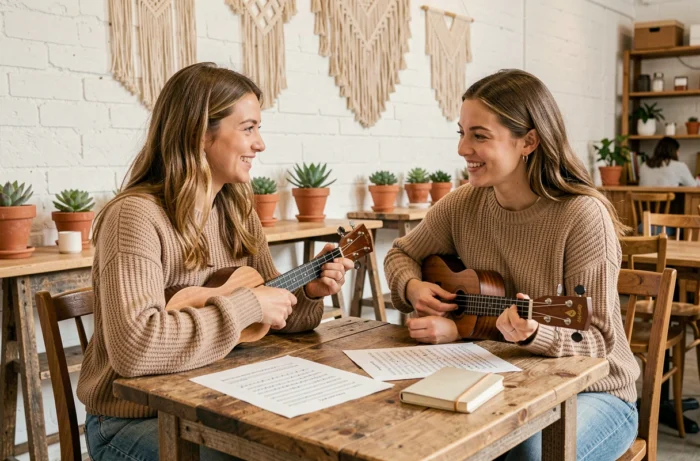
Object-making workshops, cooking classes, and board game sessions in dedicated cafés are no longer niches. These formats, long associated with activities for children or bachelorette parties, now reach a regular adult audience.
The model is based on short sessions that can be booked online, often scheduled for weekday evenings or weekend mornings. Companies also find a space for team building, with turnkey formulas gradually replacing traditional seminars.
- Pottery and ceramics workshops have waiting lists in several major French cities, indicating demand that exceeds current supply.
- Game cafés (board games, role-playing games) are structuring into networks, with regular openings in Paris and other regions.
- Thematic cooking classes (fermentation, Japanese pastry, plant-based cooking) are positioning themselves as full leisure experiences, not just training.
The common denominator of these activities remains the social dimension. In a context where screen time increases every year, formats that offer physical interaction and a concrete result occupy a complementary place. The coexistence of connected leisure and in-person activities defines how leisure time is structured in France today.