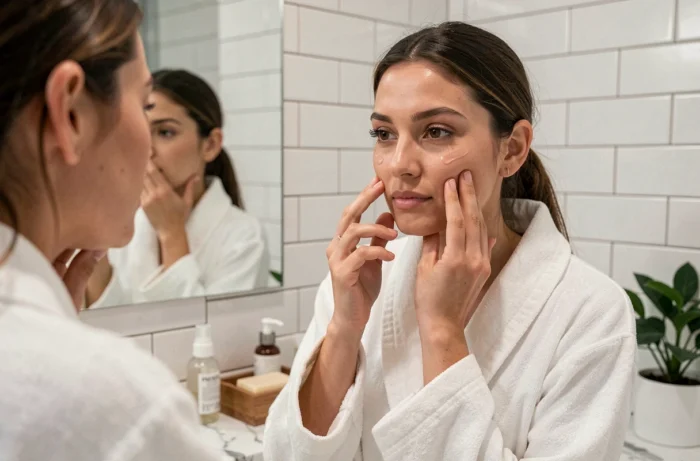
Skin that feels tight after a shower, a dull complexion despite applying cream every morning, redness that appears for no apparent reason: these everyday issues often point to the same problem—a beauty routine that isn’t quite right. Bringing out your natural glow isn’t about piling on products, but about a few targeted steps tailored to what your skin needs from day to day.
A weakened skin barrier: the first warning sign your skin sends
Stinging when you apply a serum, persistent tightness, or diffuse redness on your cheeks or forehead: these signs point to a struggling skin barrier. We often associate this kind of reaction with sensitive skin, when the problem is frequently caused by using too many active ingredients or changing products too often.
A dermatologist interviewed by HELLO! in October 2026 recommends temporarily simplifying your routine in this situation and reintroducing products one at a time. Stick to a gentle cleanser, a basic moisturizer, and sunscreen. Leave everything else aside until your skin feels comfortable again.
This approach runs counter to the trend of layering skincare products. In practice, you’ll get a better glow from three well-tolerated products than from eight bottles that work against each other. When browsing Planète Beauté’s beauty tips, you’ll find the same approach: a streamlined routine tailored to each skin type.

Facial hydration: target two distinct levels
Hydrating your skin isn’t just about applying cream in the morning. Hydration works on two complementary levels, and neglecting either one can undermine the results of the other.
Internal hydration through water and diet
Staying properly hydrated supports better blood circulation, which can help your complexion look fresher. Drinking water regularly throughout the day is the simplest and least expensive way to support your skin’s glow.
When it comes to food, antioxidant-rich fruits (blueberries, kiwis, pomegranates) and sources of healthy fats such as avocado nourish the skin from within. A balanced diet complements topical skincare; it doesn’t replace it.
Topical hydration tailored to your skin type
Oily skin doesn’t need the same moisturizer as dry skin. Choose a lightweight texture (gel or fluid) for combination to oily skin, and a richer cream for dry skin—especially in winter, when cold weather and indoor heating speed up dehydration.
Hyaluronic acid, found in many serums, attracts water and holds it in the upper layers of the epidermis. Apply it to slightly damp skin to boost its effect. Follow with a plant oil (jojoba or prickly pear seed oil) to seal in moisture, especially at night.
Daily sun protection: an underrated beauty essential
We often think of sunscreen only in summer or at the beach. The reality is more nuanced. In an interview published by HELLO! in October 2026, dermatologist Sam Bunting points out that UVA rays, which contribute to skin aging, are present even on cloudy days and can pass through windows.
In practical terms, this means that someone working near a window exposes their face to UVA rays for several hours a day, including in fall and winter. Adding a sunscreen with an adequate SPF to your morning routine helps protect against dark spots and premature loss of firmness.
This step takes just a few seconds. Today’s formulas blend into the skin without leaving a white cast and layer easily under makeup. Daily sun protection is the most cost-effective anti-aging skincare step.

Facial cleansing: the method that can transform your skin’s texture
Cleansing determines how well the rest of your skincare works. Poorly cleansed skin accumulates sebum, pollution, and makeup residue, which can clog the skin and dull your complexion.
Double cleansing, popularized by Korean skincare routines, remains an effective evening method:
- Start with an oil-based cleanser (cleansing oil or balm) to dissolve makeup, sunscreen, and oxidized sebum, including waterproof makeup
- Follow with a gentle water-based cleanser (foaming gel or milk cleanser) to remove water-soluble residue such as sweat and any remaining impurities
- In the morning, one pass with a gentle cleanser is enough, since your skin has only accumulated overnight sebum
One often-overlooked point: beauty tools (brushes, sponges) need to be cleaned regularly. A dirty brush transfers bacteria to your face and can cause breakouts, even when you’re using the best products.
Natural and organic cosmetics: what labels don’t always tell you
The words “natural” and “clean” on a package don’t guarantee that a product is effective or safe. A naturally derived ingredient can irritate the skin (some essential oils, for example), while a synthetic active ingredient may be well tolerated and backed by research.
Likewise, dietary supplements and cosmetics are subject to different rules when it comes to claims. A claim approved for an ingested nutrient doesn’t automatically justify the same claim for a cream or serum containing that ingredient.
In practice, it’s worth reading the INCI list (the full, mandatory ingredient list) rather than relying on the marketing claims on the front of the package. Plant-based ingredients such as shea butter, jojoba oil, and aloe vera have proven benefits, but their concentration in the finished product matters just as much as their presence.
An effective daily beauty routine comes down to simple choices: protect your skin barrier, hydrate on two levels, apply sunscreen every morning, and cleanse properly at night. Visible results come from consistency, not from using more products. Glowing skin is built with three or four carefully chosen products, used consistently over several weeks.