The numbers don’t lie: over 40% price difference between a standard chalet and an insulated version for year-round living. Behind the promise of a “year-round habitable chalet,” the reality is much more nuanced. From the reluctant municipality to the manufacturer willing to adapt everything, each project grapples with the complexity of regulations and the diversity of local requirements. Some files progress, others get bogged down; yet, on paper, everything seems possible.
Habitable Chalets: What Options for Optimal Comfort and True Year-Round Living?
Energy Efficiency and Insulation: The Foundation of a Sustainable Habitat
Claiming to live in a chalet year-round in 2026 requires focusing on thermal insulation. Whether the project involves a wooden frame or laminated solid wood, efficiency starts at the design stage. Without insulated flooring, high-performance walls, and reinforced roofing, there is no lasting comfort. Today, double-flow ventilation systems make a difference: heat stays in the habitat, humidity is expelled, and life becomes easier even when winter stretches beyond reasonable limits.
Layout and Finishing: Modularity and Functionality
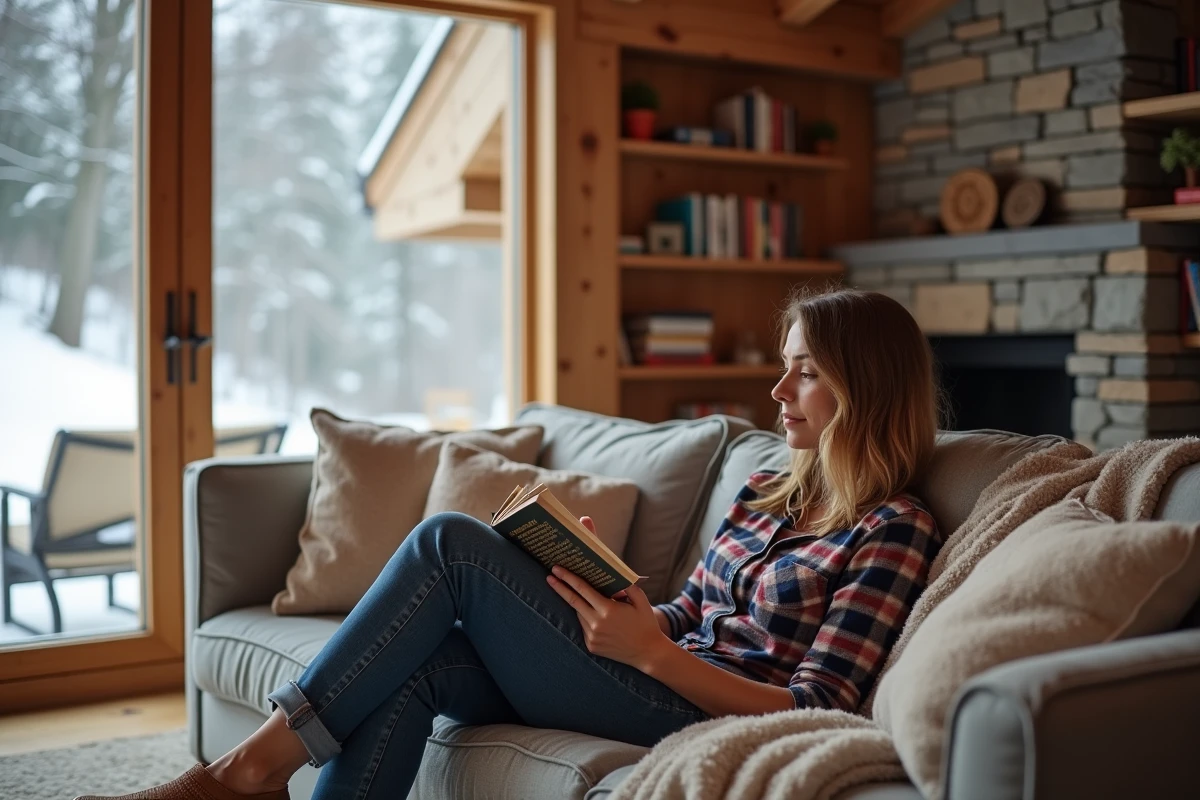
Managing the layout of your habitable chalet means rethinking everything for every square meter. A well-designed garden studio creates real living spaces, distinct and functional. Between partitions, good carpentry, and quality materials, sacrificing comfort at the altar of style is impossible. Natural light must enter, storage solutions must integrate, and modern equipment must find its place: this is where the difference lies compared to a simple garden shed.
Here are the essential foundations for transforming a wooden chalet into a true year-round livable dwelling:
- High-performance thermal insulation: wood wool, cellulose wadding, or suitable technical panels
- Double-flow ventilation to maintain air quality and limit heat loss
- Interior layout designed for daily life throughout the year
- Distinguish between wood frame and solid wood based on climatic conditions and available budget
At the heart of the experience, the choice of materials and suitable devices ensures peace of mind, regardless of the season. Those who hesitate can explore the designenville.fr website to delve deeper, compare, or simply find inspiration.
Budget, Legislation, Layout Tips: What You Really Need to Know Before Getting Started
Budget: The Real Figures of a Realistic Project
Talking about price means facing reality: for a chalet habitable year-round in 2026, expect to pay between 1,500 and 2,500 euros per square meter, excluding land. This figure includes a reliable construction that complies with regulations, but you must add connections (water, electricity, sanitation), which are often more expensive if the land is isolated or difficult to access. Allow for some flexibility: local constraints or the pursuit of better energy performance will inflate the budget.
Legislation: The Framework, Pitfalls to Avoid
Starting a wooden chalet project for year-round living requires deciphering the local urban planning plan (PLU) of the targeted municipality. From 20 m² of ground area, a prior declaration of work becomes essential. Beyond 50 m², a building permit is required. If there is no collective sanitation system, you will need to plan for an autonomous solution for wastewater. The feasibility will then depend on the land, its constraints, and sometimes, a nuance in the local regulations.
Here are some points to watch for to anticipate administrative or technical obstacles:
- Include often lengthy processing times: it is not uncommon to wait several months before starting work
- Seek advice from a professional, especially if the land has specific or unusual constraints
- Analyze local requirements carefully, so that the project does not stumble over a detail in the file
Layout: Tips for a Sustainable Habitat
To last, the habitable chalet will focus on compactness, ease of maintenance, and robustness. Rigorous selection of materials, insulating joinery, spaces designed to remain easily temperate: each element adds a brick to the whole. Maximizing light, thinking about daily life, anticipating the evolution of family life transforms a simple volume into a true lasting cocoon.
Adopting the habitable chalet means giving up ease. It is betting on solidity, thoughtfulness, and sometimes, shaking up one’s habits. Those who dare do not just acquire a functional cabin: they invent another way of living, sustainable and firmly rooted in their time.