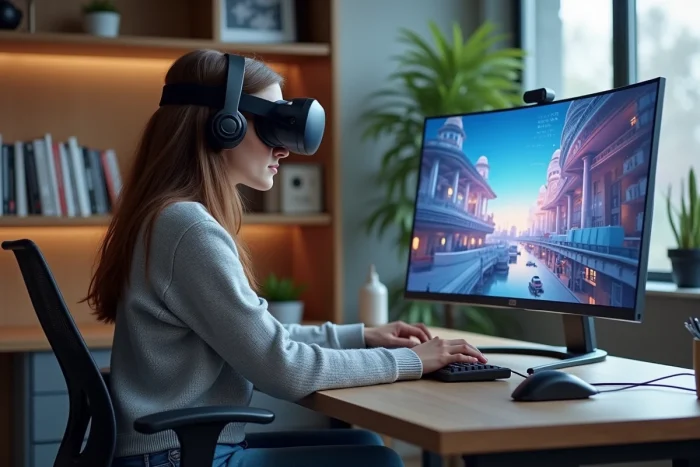
A digital world can outlive its creators. This is the unique promise of virtual environments: a work, an experience, or a digital space remains accessible, day and night, regardless of the presence or absence of the one who imagined it. Simulation tools allow us to try what reality makes impossible to test, without material breakage or logistical headaches. On immersive platforms, every modification is recorded, the ability to reverse becomes immediate, even after dozens of attempts. And depending on the chosen engine, the rules of movement and interaction change completely, transforming both the way we experiment and collaborate.
Virtual Reality: Understanding the Fundamentals and First Steps
Virtual reality is no longer anecdotal. It has now established itself as a thriving testing ground, where imagination and innovation coexist at every moment. By diving into these virtual environments created in three dimensions, simply putting on a virtual reality headset is enough to shift: ordinary perception fades, the real world disappears, and the experience takes on unprecedented intensity. Here, manipulating, exploring, or interacting becomes as natural as breathing.
In the face of this novelty, many wonder: how to integrate these uses into their daily lives or at the office? It all begins with learning the gesture, getting accustomed to the equipment, discovering what the different virtual reality headsets allow, or do not allow. Very quickly, adjusting the gaze position, fine-tuning movements, appreciating sound spatialization, or graphic realism prove to be crucial. Everyone appropriates the virtual at their own pace, through trials and discoveries.
For those who want to experience it without equipment, there are simple alternatives. Accessing an interactive digital world sometimes only requires a browser: for example, you can visit Make World online. This approach offers a direct entry into virtual reality, without technical barriers. By testing this portal, any user discovers that from the very first minute, their perception of space and time is reinvented, the boundary between the real and the imaginary stretches, fueling new ways of learning or collaborating.
What Are Navigation Simulators Used For in Virtual Worlds?
Behind the scenes of virtual worlds, navigation simulators ensure the coherence of the experience. Their role is not limited to moving an avatar from point A to point B: they redefine the link between humans and the digital space. Thanks to them, movements become instinctive and contribute to enhancing immersion, a key element in the success of an experience.
Behind this apparent simplicity lies a valuable experimentation platform, both for testing designs of spaces, exploring the ergonomics of future virtual environments, or validating an architectural concept. Researchers and creators scrutinize every gesture, every view, every detail, endlessly adjusting their universes to make them smoother and more instinctive.
To better measure the diversity of their uses, one only needs to look at the fields in which they intervene:
- In video games, they structure spatial continuity, bring connected worlds to life, and define the movement logic specific to each universe.
- For professional training or research, they simulate complex situations. The user practices in a digital environment, tests scenarios, and acquires new skills without any real risk.
- In design of virtual spaces, they reveal the relevance of each path taken, test the ease of user journeys, and guide the optimization of the interface.
It is their ability to transform raw data into tangible sensations that makes these simulators powerful. They shift simple exploration into an experience, engaging both sight and action, and pave the way for uses where augmented reality meets virtual reality within hybrid architectures.
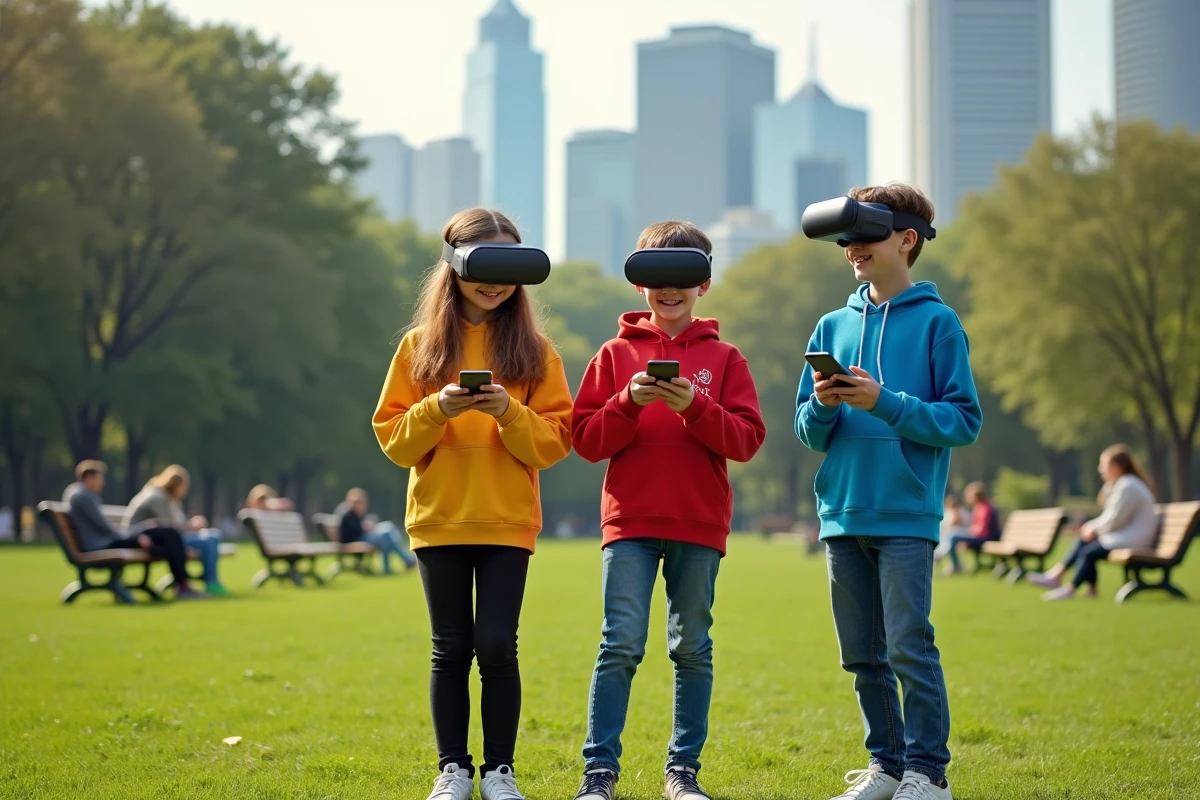
Explore, Learn, and Create: All the Possibilities That Open Up to You in the Virtual Universe
Virtual reality does not duplicate the physical world; it invents new ones, where curiosity, transmission, and initiative become decisive engines. With each use, the user advances in universes designed to capture attention, invite autonomy, and stimulate the immersive experience. Behind every backdrop, a workshop, a virtual art exhibition, a collaborative experience, or a multiplayer game reveals the potential of current tools.
Recent devices propel virtual reality technology into uses once thought reserved for fiction: creating unprecedented spaces, adding interactive objects, designing architectures, or facilitating collective workshops. Immersiveness then establishes itself as the new fuel: the user builds, modifies, imagines, takes control of their environment, leaving the posture of a passive spectator.
Everything depends on the objectives pursued. Here are some of the activities made possible by these digital universes:
- Gaming: exploring new game mechanics, designing original levels, competing in interactive challenges in augmented virtual reality.
- Learning: reproducing technical gestures, manipulating digital objects, simulating professional contexts, all in a controlled, evolving, and secure environment.
- Collaborative creation: working together in real-time, enriching a virtual universe, combining expertise around a living project.
By embracing virtual reality, our relationship with the digital transforms. From experience to experience, the usual boundaries dissipate, hinting at unexplored territories waiting to be invented, shared, and lived.