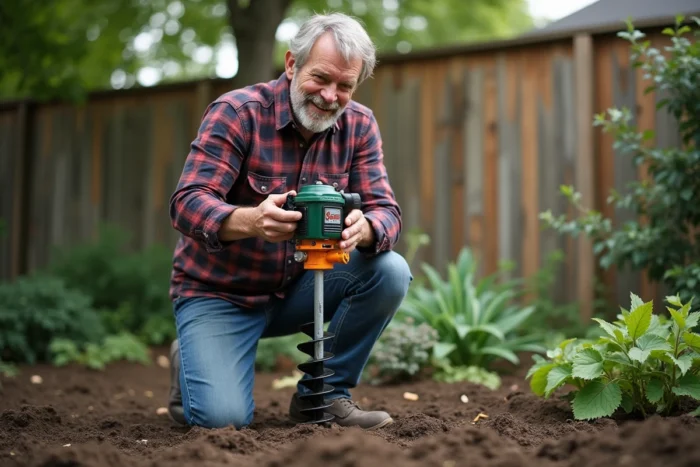
The diameter displayed on the manual is far from the only data to consider when making the right choice. Too often, gas-powered augers promise impressive performance on paper but quickly show their limits when compacted soil or rocks come into play. What really distinguishes two models is the power of the engine and the design of the auger, much more than the depth indicated in large letters on the packaging.
On the budget side, the gap can be spectacular between entry-level and premium brands, without necessarily guaranteeing a tool that is significantly more reliable or easier to handle. In reality, an affordable model serves well for those who use the machine once a year, while high-end versions are aimed at those who want to avoid vibrations and enjoy effortless starting even after a long winter storage.
What is a gas-powered auger used for and why adopt it for your gardening tasks?
No more exhausting digging chores. With a gas-powered auger, planting trees, installing a fence, or setting up stakes becomes a quick task, even on difficult terrain. This motorized tool helps accomplish in minutes what would take hours with a shovel. The performance of the gas auger remains reliable on clay, loamy, or rocky soil. No need to struggle for each hole; the engine does the work, and the depth is consistent regardless of the type of terrain.
The opportunities to use a gas-powered auger in the garden are numerous:
- Digging to plant trees or shrubs
- Installing sturdy fences or stakes
- Preparing the base for a garden shed or greenhouse
The autonomy and power of gas versions surpass those of electric models, especially when tackling a large area. It’s impossible to compare the efficiency: where digging ten or twenty holes would have been a challenge, it becomes perfectly manageable in half a day. For a clear view of the best models and practical advice from the field, tariere-thermique.com gathers files, practical tests, and feedback from experienced users.
What criteria to consider for choosing the right gas-powered auger?
Finding the right auger involves analyzing several concrete parameters without being misled by marketing rhetoric. First, focus on the actual power of the engine: only a well-sized machine can handle sticky or rocky soil without exhausting you. Next, the diameter and length of the augers matter, especially if you plan to vary the uses; here, prioritize models offering multiple compatible accessories. The depth that the machine can reach should be sufficient to ensure the stability of your plantings or foundations without struggling with extensions or risky solutions.
Another important point is the weight of the entire unit: a heavy auger tires quickly, while a compromise between robustness and maneuverability will allow you to drill holes without repeated breaks. Also, pay particular attention to the clutch system, handles, and vibration protection, especially for large drilling series. Finally, depending on the size of the planned work, choose a single-post model (usable alone) or a two-post model (for two people); the latter option makes sense for drilling large diameters or tackling particularly hard ground.

Comparison: how to choose the gas-powered auger that will truly suit you?
Before making your decision, it’s better to look at the engine power in relation to the price asked. On large projects, a solid two-stroke machine shows endurance beyond measure, while for more occasional use, lighter models are more than sufficient.
The type of soil also matters: clay or rocky terrain requires a sturdy auger with a reinforced bit and a good anti-vibration system to protect you from jolts. On sand or loose soil, an intermediate model offers the expected flexibility without getting bogged down in a power race.
To clarify things, this table summarizes some major differences:
| Criterion | Professional gas auger | Standard model |
|---|---|---|
| Engine power | Above 2.5 HP | 1.5 to 2.2 HP |
| Bit diameter | Up to 300 mm | 150 to 200 mm |
| Weight | 8-12 kg | 6-8 kg |
Also, remember to check: some models can accommodate different bit diameters, allowing you to adapt over time to all kinds of projects, from young hedges to the installation of a shed. Finally, pay attention to ergonomics and ease of maintenance; the availability of parts and ease of starting play a significant role, especially if you plan to use the auger over several seasons.
For tasks requiring strength and efficiency, the gas version clearly holds the advantage over electric or manual options. A good choice is primarily one that allows you to tackle projects without frustration or wasted time. Each hole then becomes one step closer to your project, without a lost battle against the earth.