A traditional Moroccan dish served in a neighborhood eatery rarely costs more than 30 dirhams, while a meal in a tourist restaurant can exceed 200 dirhams per person. The gap between these two extremes coexists in the same cities, sometimes just a few streets apart.
Local specialties remain available for all budgets, from street breakfasts to dinners in renowned establishments. Local habits, service hours, and vegetarian options also influence the amount to budget for each meal.
What do meal prices look like in Morocco according to types of establishments and cities
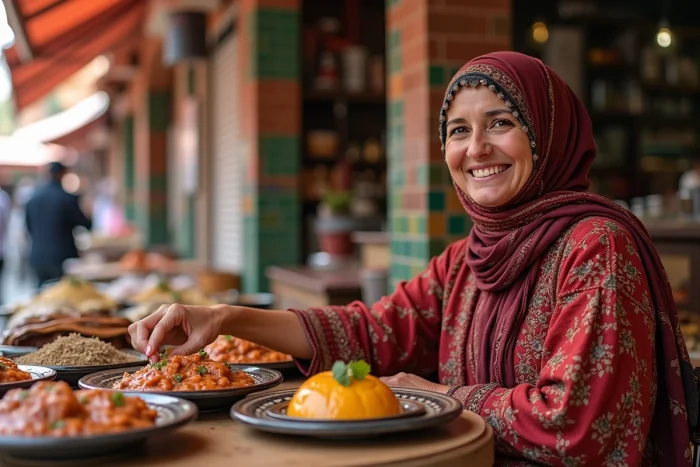
On the ground, the question how much does a meal cost in Morocco reveals a reality as colorful as the country’s souks. In Marrakech, for example, in Jemaa el-Fna square, a steaming tajine or a plate of kefta in a bustling stall exchanges hands for between 25 and 40 dirhams. Just a few streets away, a better-decorated place offers a revamped dish: the bill then jumps to 80, 120, sometimes 150 dirhams. This contrast is not reserved for the red city.
In Fès, Rabat, or Casablanca, the price range stretches depending on the address and its clientele. Family restaurants serve a couscous or a harira for around 40 dirhams, while renowned tables, favored by travelers, display menus over 200 dirhams. In Essaouira, lunching on a grilled fish, just landed from the port, rarely costs more than 70 dirhams, for a freshness hard to match elsewhere.
The Moroccan meal budget thus follows the rhythm of the cities and chosen locations. To provide a concrete overview, here are the common price ranges:
- Street eatery or local canteen: 20 to 40 dirhams
- Café frequented by locals: 30 to 60 dirhams
- Tourist table or decorated restaurant: 80 to 200 dirhams
- Refined or gastronomic addresses: starting from 200 dirhams
These price discrepancies are not just a matter of standing. They mainly tell the richness of the Moroccan culinary experience, from a quick sandwich to a carefully prepared dinner in a historic home. Seeking to know how much a meal costs in Morocco ultimately opens one up to a mosaic of flavors, traditions, and atmospheres, with each neighborhood offering its own landmarks and discoveries.
What Moroccan specialties should you absolutely try and what prices should you expect?
Moroccan cuisine asserts itself everywhere: on the colorful stalls of markets, in lively alleys, or at the corner of a quiet street. Tasting a tajine is a must, whether it’s filled with vegetables, chicken with preserved lemon, or lamb with prunes. The price depends on the location and the generosity of the plate. In a small canteen, you can get by for between 30 and 50 dirhams. For a refined version in a fancier restaurant, expect to pay up to 120 dirhams.
On the street food side, Morocco delights at low prices: spicy kefta skewers, sardine sandwiches, golden msemen… These snacks rarely exceed 15 to 25 dirhams, served warmly and often right before your eyes. During Ramadan, harira, the emblematic soup, takes center stage for around fifteen dirhams.
For those with a sweet tooth, gazelle horns with almonds flavored with orange blossom can be enjoyed by the piece or by weight, for just a few dirhams. They pair wonderfully with mint tea, an inseparable ritual of the sweet break.
Here are some benchmarks to help you navigate the prices of Moroccan specialties:
- Chicken lemon tajine: 40 to 80 dirhams depending on the location
- Pastilla: 50 to 120 dirhams
- Kefta or sardine sandwich: 15 to 25 dirhams
- Harira (soup): 10 to 20 dirhams
- Gazelle horn: 2 to 4 dirhams each
The variety of Moroccan dishes combines with accessible prices and an abundance that is striking. Stroll through the markets, settle at a small table, or let yourself be tempted by a family-run place: each meal reveals a facet of the country, between living tradition and ever-renewed flavors.
Eating well and smart: local tips to enjoy Moroccan cuisine without breaking the bank
Seek flavor, not an extensive menu. For a controlled Moroccan meal budget, focus on places where locals have their habits. In the popular neighborhoods of Marrakech, Fès, or Rabat, street food offers authentic dishes for just a few dozen dirhams. The balance between quality and price is experienced daily there.
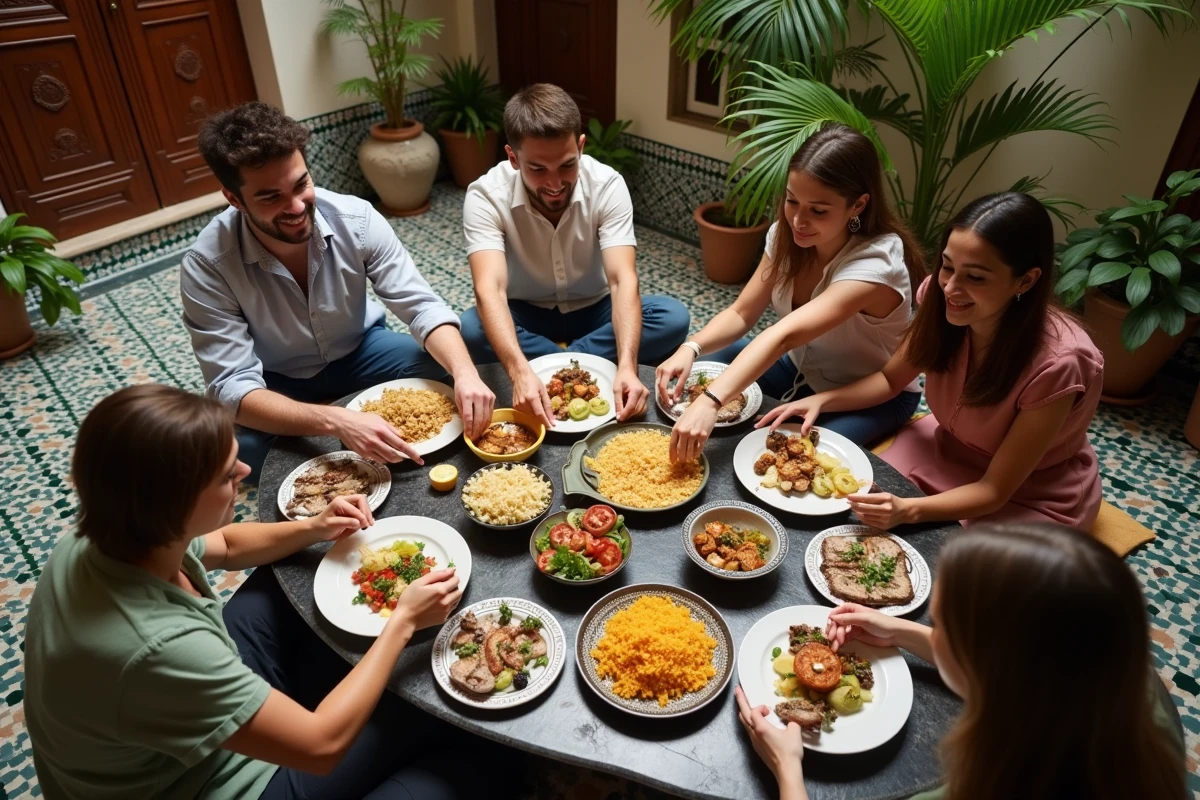
Sharing is at the heart of Moroccan culture. Ask for the dish of the day or the “worker’s menu” in a eatery: often, a tajine, a harira soup, warm bread, and a few olives arrive for 20 to 40 dirhams. The markets are bustling with stands where you can taste specialties made to order. As night falls, the tables of Jemaa Fna in Marrakech transform into a lively scene where each meal is discussed, sometimes negotiated.
To keep control of your Morocco travel budget, a few reflexes make a difference:
- Avoid touristy spots where prices soar.
- Try fresh fruits: sold by the kilo, they are significantly cheaper than in France.
- Pair your plate with mint tea, often offered or at a very low price.
- For souvenirs, prefer neighborhood grocery stores for olive oil or spices.
Moroccan cuisine is enjoyed without pretension, supporting local artisans and merchants. Seek authenticity, dare to discover, let yourself be carried away by the generosity of each plate. Here, taste is not only counted in dirhams: it is measured in encounters and stories to tell.