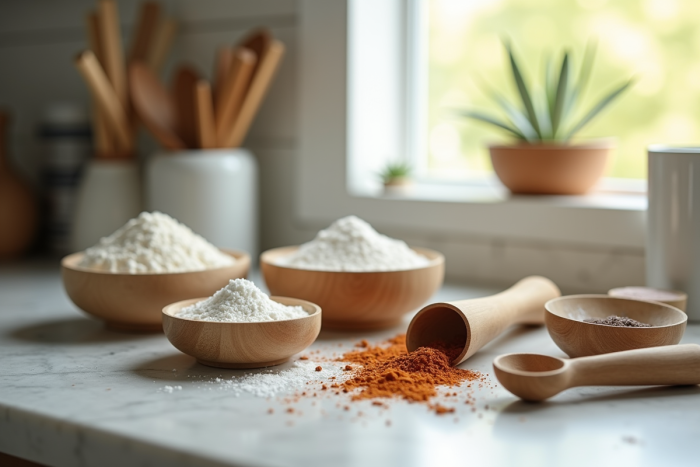
Cooking with precision is an art that requires specific tools and techniques. Whether you are an experienced chef or a passionate amateur, mastering the conversion of volumes and the exact measurement of ingredients can transform your dishes. Imagine preparing an American recipe that requires ‘cups’ while your scale only speaks in grams. This can quickly become a puzzle, but with a few tips and a bit of know-how, foreign cooking will hold no secrets for you.
The differences between measurement systems may seem confusing, but they are not insurmountable. For example, 1 cup of flour is approximately 120 grams, while 1 cup of sugar weighs about 200 grams. Using conversion charts or mobile apps can greatly facilitate these adjustments. Investing in versatile measuring tools, such as measuring spoons and cups, can ensure consistent and delicious results every time.
The Basics of Measurement Units in Cooking
Understanding measurement units is essential for successfully executing your recipes. Liquid and dry measurements do not follow the same rules. For instance, a tablespoon corresponds to 15 ml, while a teaspoon contains 5 ml. These distinctions are vital for achieving the precision needed in cooking.
Common Conversions
- 1 tablespoon = 15 ml
- 1 teaspoon = 5 ml
- 1 cup = 240 ml
- 1 ounce = 28 g
- 1 pound = 454 g
- 1 kilogram = 1000 g
For liquids, converting from milliliters to liters is often necessary. For example, converting 200 ml to l is a simple yet essential operation for precise measurements. Conversion in cooking involves a variety of units: from milliliters to liters, including centiliters and deciliters.
| Unit | Equivalent |
|---|---|
| Milliliter | 0.001 liter |
| Centiliter | 10 milliliters |
| Deciliter | 100 milliliters |
| Liter | 1000 milliliters |
Weight measurements, such as ounces, pounds, and kilograms, are particularly used for dry ingredients like flour or sugar. For example, 1 ounce is equivalent to 28 g, which is fundamental for recipes requiring precision to the gram.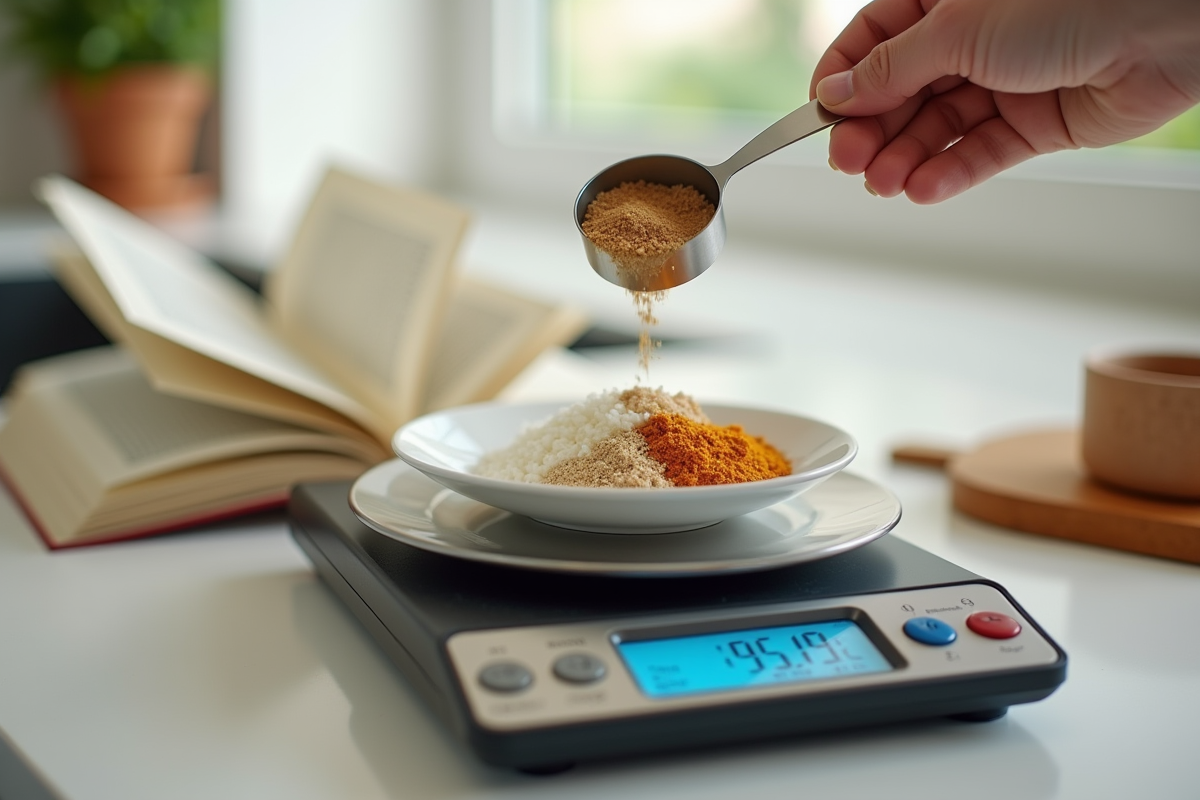
Techniques and Tips for Accurate Measurements
To measure accurately, use appropriate tools. A digital kitchen scale allows you to weigh dry ingredients like flour and sugar. For liquids, a measuring cup with graduations in milliliters and centiliters is essential.
- Use a scale for dry ingredients.
- Prefer a measuring cup for liquids.
Practical Tips
Level your spoons and cups to ensure an exact measurement. Use the back of a knife to smooth the top. This technique is often overlooked but ensures increased accuracy, especially for ingredients like flour where a slight variation can alter a recipe.
To avoid conversion errors, keep a conversion chart handy. For example, for a Margherita pizza recipe intended for 300 people, the amount of flour needed is 6 kg, the yeast is 30 g, and the water is 3 liters. This data allows for rigorous planning.
| Ingredient | Quantity for 300 people |
|---|---|
| Flour | 6 kg |
| Yeast | 30 g |
| Water | 3 liters |
| Salt | 45 g |
| Tomato | 2 kg |
| Mozzarella | 2 kg |
| Basil | 100 g |
| Oil | 50 ml |
Adapt your measuring techniques according to the specifics of each ingredient. For example, milk and oil can be measured directly in the measuring cup, while for dry ingredients, a scale remains more reliable. Follow these tips to ensure the success of your recipes.