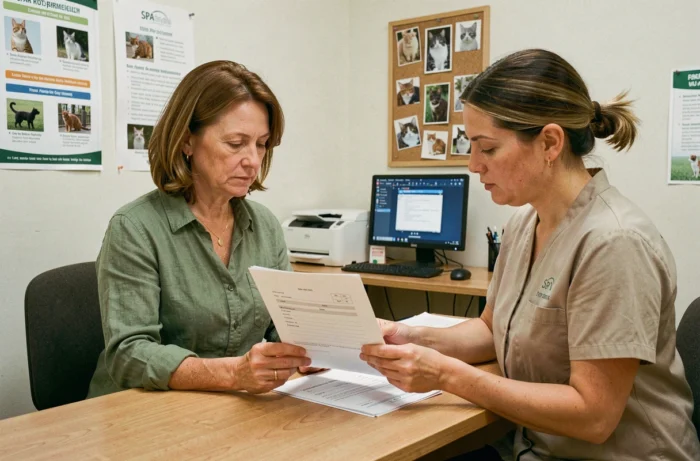
When a shelter refuses to entrust a cat, the decision often surprises the adopter. However, the SPA and animal protection associations have a wide discretionary power to evaluate each application. Several reasons, whether administrative, practical, or related to the animal’s well-being, can justify a refusal. Understanding these criteria allows one to better prepare their application and avoid disappointment on the day of the visit.
Reasons for refusing the adoption of a cat from a shelter: comparative table
The reasons cited by shelters vary by organization, but some are consistently mentioned. The table below distinguishes between regulatory reasons (imposed by law) and discretionary reasons (left to the shelter’s judgment).
| Type of reason | Concrete examples | Basis |
|---|---|---|
| Absent or incomplete commitment certificate | Document not signed, signed less than seven days before the transfer | Regulatory |
| Court prohibition on possession | Conviction prohibiting the possession of animals | Regulatory |
| Minority of the adopter | Person under 18 presenting alone | Regulatory |
| Inadequate housing/animal | Apartment without security for a fearful cat, lease prohibiting animals | Shelter’s discretion |
| Saturation of the structure | Postponement or redirection to another shelter due to lack of possible post-adoption follow-up | Shelter’s discretion |
| Adopter’s profile deemed unsuitable | Very elderly person for a very active kitten, history of returning animals | Shelter’s discretion |
| Rejected payment method | Check not accepted (frequent defaults), unpaid financial contribution | Internal regulation |
The SPA reminds us on its website: it is solely responsible for deciding whether or not to adopt an animal. This power is not arbitrary; it is based on an evaluation grid specific to each shelter.
The fact that the SPA can refuse a cat is based on this combined legal and associative framework, where the protection of the animal takes precedence over the adopter’s desire.
Commitment certificate and legal seven-day period: a common obstacle
Since the introduction of the commitment certificate, any cat adoption requires the signing of this document at least seven days before the actual transfer of the animal. This reflection period is non-negotiable.
An adopter who presents at the shelter without a certificate, or with a document signed the day before, will be refused the transfer. The shelter has no leeway on this point: the law imposes it.
The certificate covers several commitments: the cat’s physiological needs, foreseeable veterinary costs, the animal’s lifespan. It must be signed by each future adult holder in the household. In practice, several shelters find that this document remains poorly known among adopters, leading to avoidable refusals.
What the certificate does not verify
The commitment certificate does not include a mechanism for checking the criminal record. If a person is subject to a court prohibition on possessing animals, the shelter must rely on legally accessible documents and information to detect it. Verification thus partly relies on the adopter’s declaration and the staff’s vigilance.
Saturation of shelters: a reason for refusal that does not concern the adopter’s profile
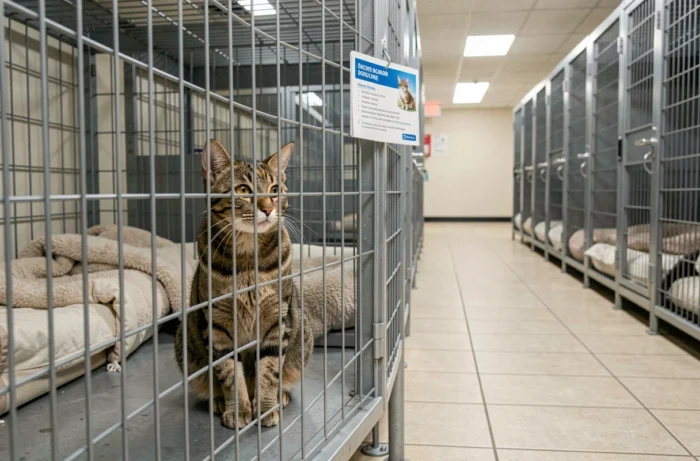
The saturation of reception structures is an increasingly common reason for refusal. When a shelter is saturated, it may postpone or suspend new adoptions to preserve its capacity for post-adoption follow-up. A cat entrusted without support is at a higher risk of being returned in the following weeks.
Concrete consequences for the adopter
- The shelter may direct to another partner structure with available spots, which extends the waiting times
- Some associations temporarily freeze kitten adoptions during the summer months, when abandonments surge
- A refusal related to saturation is not a judgment on the adopter’s application, but it remains definitive for the animal in question at that moment
On the other hand, an adopter refused due to saturation can resubmit their application a few weeks later, once the reception capacity has been balanced.
Compatibility between the cat and the adopter: the shelter’s evaluation criteria
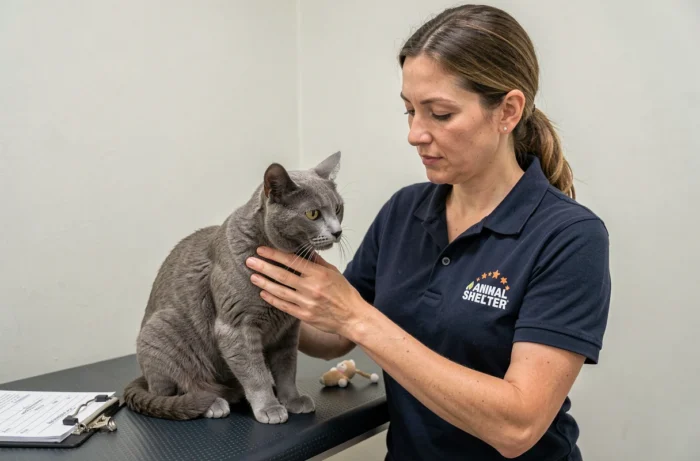
Beyond regulatory reasons, each shelter assesses the compatibility between the proposed cat and the adopter’s lifestyle. It is in this area that refusals are the hardest to accept, as they involve human judgment.
A frequently reported case involves elderly individuals wishing to adopt a young cat. Some shelters believe that a very active kitten could cause a fall for a person with reduced mobility. The decision rests with the shelter’s management, sometimes after a home visit or a follow-up interview.
Elements evaluated during the interview
- Presence of other animals in the home and compatibility with the targeted cat
- Type of housing (outdoor access or not, floor level, window security)
- Daily presence time at home, especially for anxious or recently weaned cats
- Adoption history: a previous return of an animal may weigh in the evaluation
The shelter seeks to minimize the risk of return, not to exclude adopters. The costs associated with a return after adoption confirm this: some structures charge 50 euros for a cat returned after the fifteenth day.
Supporting documents and financial contribution: administrative blockages
Each shelter sets its own documentary requirements. An ID and proof of residence are almost always required. Some structures also ask for an insurance certificate or a copy of the lease mentioning the authorization to keep an animal.
The financial contribution covers identification (microchip), vaccination, sterilization, and veterinary care provided during the stay at the shelter. Payment is generally made by credit card or cash, with checks being refused by many structures due to recurring defaults.
An incomplete application or an unaccepted payment method is enough to block the process on the same day. Preparing all the documents in advance remains the simplest way to avoid a purely administrative refusal, which has nothing to do with the actual capacity of the adopter to care for a cat.