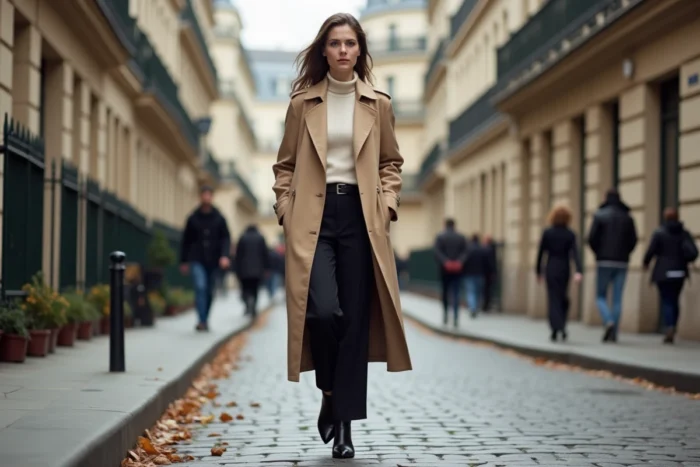
Which fashion trends spotted on the runways withstand the test of a crowded metro, a downpour at Place de la République, or an impromptu after-work in the Marais? Most fashion content lists pieces without ever confronting them with the real constraints of a day in Paris. This article compares the most visible spring-summer trends in the capital to their degree of adaptability according to three concrete criteria: urban mobility, changing weather, and the office-to-evening transition.
Fashion trends in Paris: daily wearability grid
The pieces that dominate the spring-summer collections are not equal once they leave the showroom. The table below cross-references the most publicized trends by fashion media with their behavior in three typically Parisian situations.
| Trend | Mobility (walking, biking, metro) | Variable weather | Office to evening |
|---|---|---|---|
| Pleated long skirt | Good range, but risk of getting caught in escalator | Dries slowly, sensitive to wind | Easy transition with a change of top |
| Short colorful jacket | No discomfort, freedom of movement | Lightweight, insufficient alone in the rain | Transforms a sober look |
| Wide pants (barrel or loose) | Comfortable to walk, cumbersome on a bike | Absorbs moisture at the hems | Versatile if the fabric is structured |
| Sheer or layered dress | Practical if knee-length | Fragile, requires an additional layer | Strong visual impact in the evening, delicate at the office |
| Oversized sweater (light cotton) | Very suitable | Effective mid-layer | Too casual alone for some dress codes |
This comparison shows a clear gap between pieces that work on three criteria and those that meet only one. The short colorful jacket remains the most versatile piece of spring-summer for real Parisian use.
To follow the evolution of these dress codes in the capital, fashion trends on Faits sur Paris offer a regularly updated overview.
Office dress code in Paris: adapting a trend without distorting it
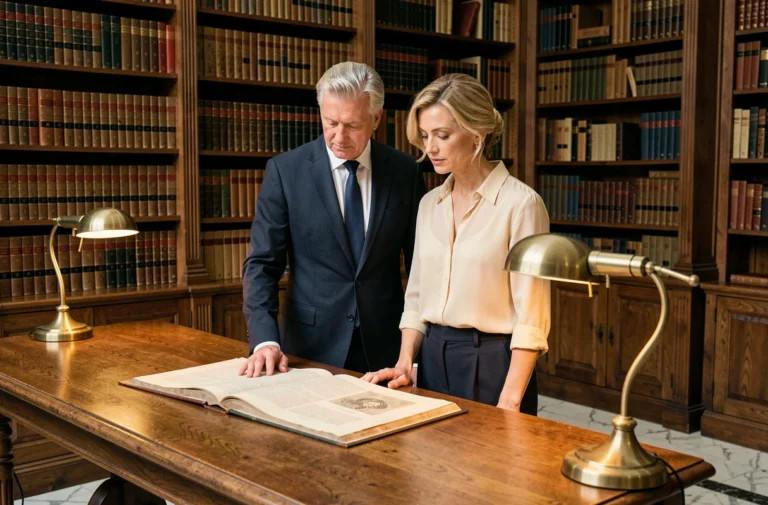
The gap between what is shown on the runways and what is accepted in a Parisian open space constitutes the first filter for adopting a trend. The artistic directions of fashion houses push volumes, transparencies, and saturated colors. Professional daily life imposes a completely different reading.
The rule of one strong piece per outfit
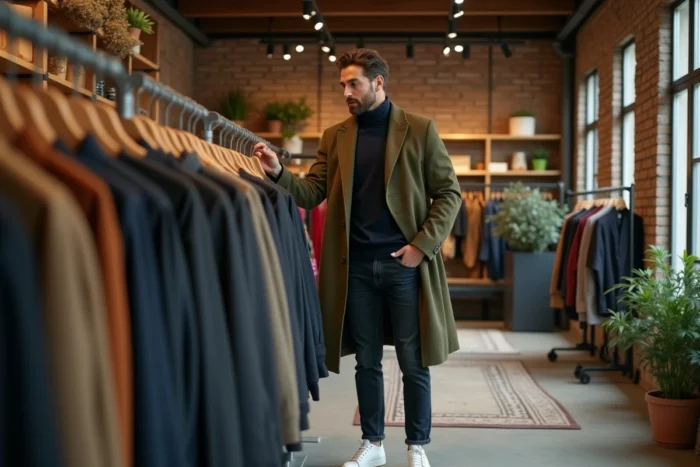
Applying a trend at the office works when the visual signal is limited to one element. A barrel pant in structured fabric paired with a neutral top works in most professional environments. However, pairing the same pants with a bright short jacket and bold accessories shifts into a too editorial realm.
The principle is simple: one trendy piece, the rest in tried-and-true basics. This approach preserves the readability of the style without causing friction with the implicit codes of the workplace.
Office-to-evening transition in the Marais or Saint-Germain
The most common constraint in Paris remains the direct transition from the office to dinner or drinks. Carrying a change of outfit on the metro is rarely realistic.
- Replacing flat shoes with a pair of block heels slipped into a tote bag is enough to change the silhouette of wide pants
- Removing a layer (oversized sweater, blazer) to reveal a more elaborate top creates an immediate contrast
- Adding a structuring accessory (visible earrings, contrasting belt) changes the perception of the outfit without changing clothes
An effective Parisian wardrobe relies on pieces that allow for the subtraction or addition of just one element.
Parisian weather and textile choices: what trends don’t say
Paris in spring alternates between cool mornings and mild afternoons, sometimes within the same day. The spring-summer collections feature lightweight fabrics, often thin, rarely designed for this instability.
Linen, omnipresent in the new collections, wrinkles within the first hour of wear. Untreated cotton absorbs moisture and takes time to dry. Lightweight synthetic materials hold up better in the rain but pose a comfort issue in sudden heat.
Cotton-polyester blends or lightweight tropical wools represent a compromise rarely highlighted by brands but adopted by a large part of Parisian women who walk daily.
Functional layering versus aesthetic layering
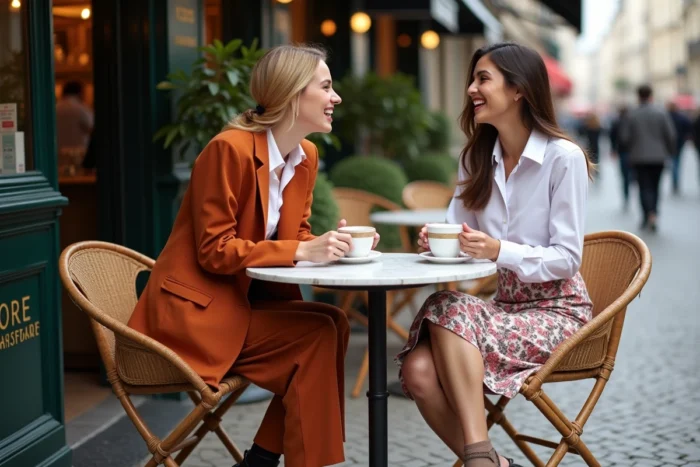
The trend of visible layering (dress over pants, open shirt over a bralette) responds to an aesthetic bias. In Paris, layering primarily serves a climatic function. A short trench worn open in the morning and removed at noon does not have the same logic as a layer game designed for a photoshoot.
The distinction matters: a layering that can be easily dismantled in the metro is worth more than a complex layering frozen for the photo. The practical test remains this: can each layer be worn alone without losing the outfit’s coherence?
Parisian style and social media influence: the street filter
Fashion content on social media and influencer accounts showcase outfits photographed in controlled conditions. Flattering light, studied posture, absence of crowds. The Parisian street applies a different filter: constant movement, changing natural light, interaction with dense urban furniture.
The street style captured during fashion weeks in Paris reveals a gap with looks posted in studios. The most photographed silhouettes in real situations often share the same characteristics: limited palette, sharp cut, one contrasting element.
The trend that survives on the Parisian street is the one that remains readable in motion, not just in a static position facing a camera. This criterion eliminates a significant portion of seasonal proposals, notably extreme volumes and cumbersome accessories.
Style in the capital is built less by accumulating trendy pieces than by methodically eliminating what does not withstand a full day, from the early morning RER to the last drink. The spring-summer collections offer the raw material, but it is daily use that decides.